Overview
Use SheetXAI to draft short LinkedIn connection messages from the information already organized in your lead sheet. For a list, a subagent handles one person's row and writes that person's draft to the matching output cell. It can use notes and the biggest ICP gap to choose a relevant detail. You review and edit the messages in the spreadsheet, then decide whether to send them yourself.
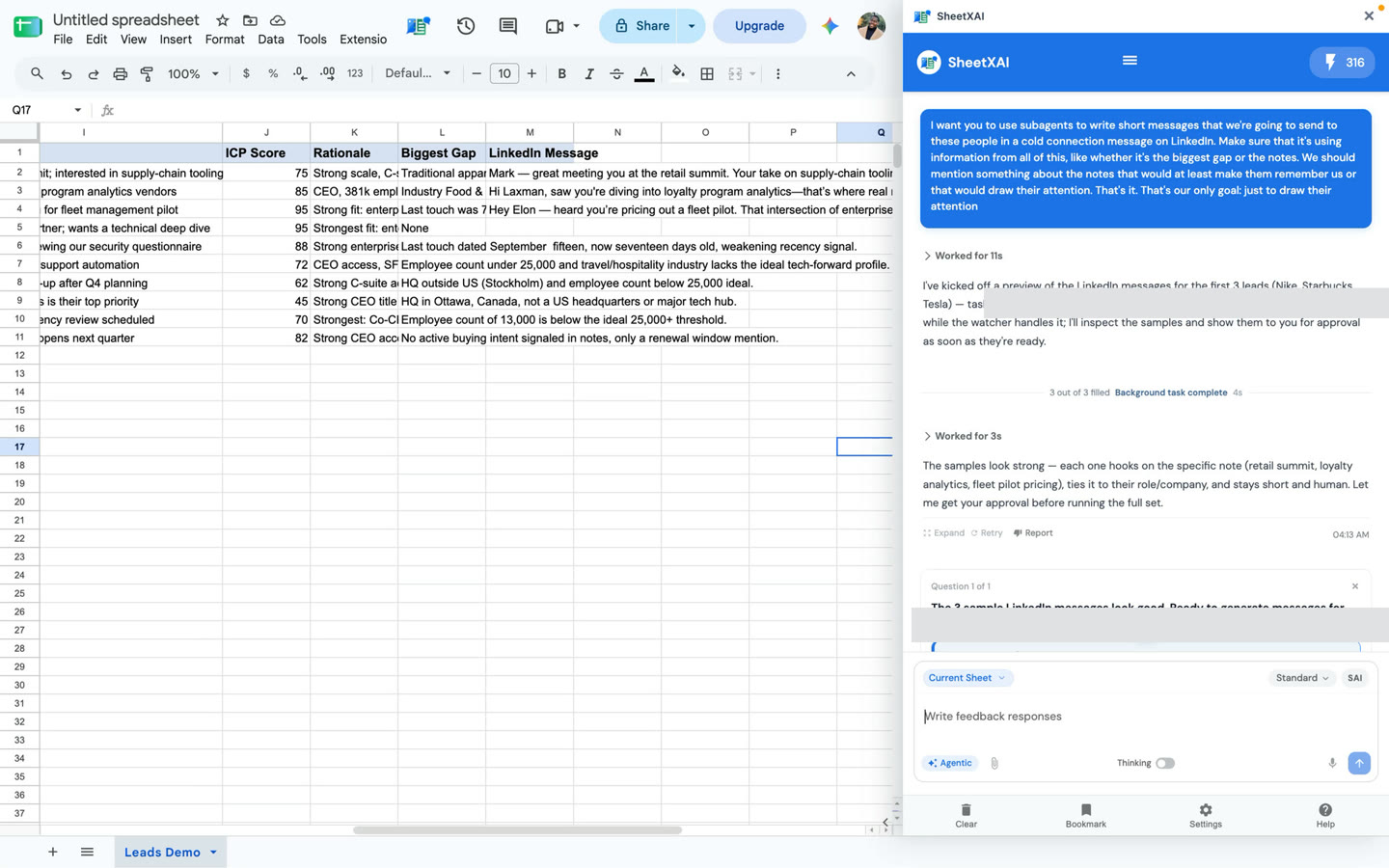
Prepare the lead and message columns
Use one person per row. Include only context you are prepared to use for personalization, such as:
- Company and contact name
- Notes or a relevant interaction
- Biggest ICP gap or other useful lead context
- LinkedIn message, an empty output column for the draft
The example builds on a lead table with notes and an ICP gap. If you do not have those fields, remove them from the request and use the context available to you. Use only information you have a valid reason and permission to process.
Generate drafts from the supplied context
Use this prompt as a starting point. Replace the column name and adjust the tone, length, and constraints to match your outreach:
Use subagents to write a short LinkedIn connection message for each lead, row by row, in the LinkedIn Message column. Use the available lead information, especially the notes and biggest gap, to include one relevant detail that may catch the person's attention. Keep the message natural, specific to the row, and concise. Do not invent details or claim a relationship or interaction that is not in the sheet.
- Select a small group of lead rows and request draft messages in the output column.
- Review the sample for factual accuracy, tone, length, and whether the chosen detail is actually present in that person's row.
- Refine the prompt with your voice, character limit, greeting preference, and any wording to avoid. Iterate on the sample until it meets your standards.
- Ask SheetXAI to draft for the remaining selected rows using the revised prompt.
- Edit and approve every message yourself before sending it through your chosen channel. SheetXAI writes drafts in the spreadsheet; it does not send LinkedIn messages.
Review before outreach
Generated copy can sound generic, overstate available context, or use punctuation and phrasing that does not fit your voice. Verify each personalized detail against the row and underlying source. Make sure each note is appropriate for a first connection and follows the rules that apply to your outreach. Treat every result as an editable draft, not a ready-to-send message.
Troubleshooting
- Messages sound generic: Add specific, accurate context and describe the style and length you want.
- A message invents familiarity or a detail: Ask for drafts to use only the supplied fields, remove unsupported claims, and review the regenerated copy.
- The personalization feels awkward: Try a simpler prompt that uses one concrete note rather than listing every lead field.
- Drafts land in the wrong column: Name the intended output header and verify the selected rows and table headers.
Replacing Clay series
Continue in order: